
Technology inventory

Track what shapes the agent experience.

Inventory established foundations and emerging agent interfaces without confusing presence with readiness.

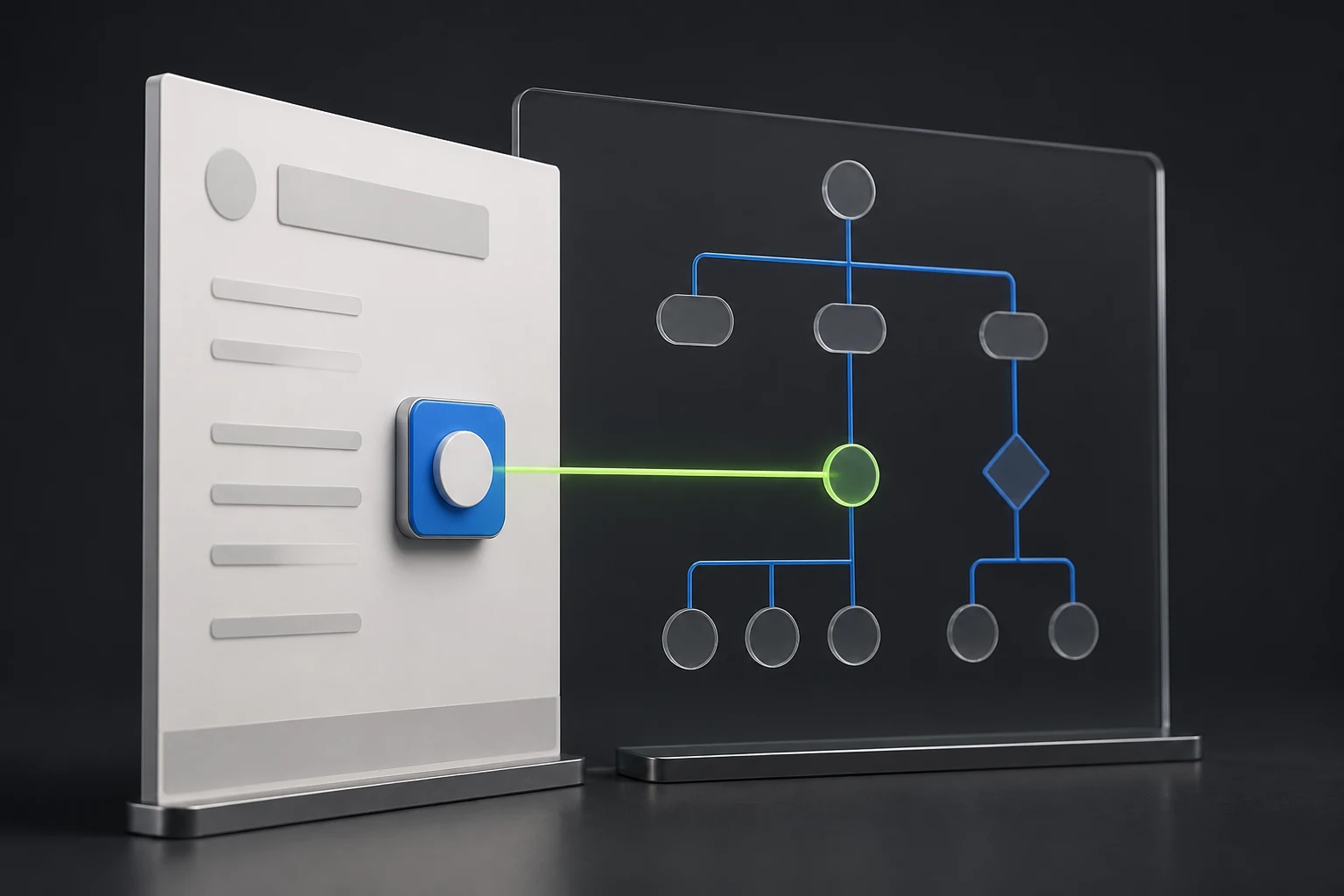
Abstract layered technology inventory progressing from web foundations to emerging agent interfaces

Technology presence is a signal, not the outcome.

Aiscovery records what exists, validates what it can do and then tests whether it helps a real task.

Lifecycle describes the technology.

Lifecycle labels indicate ecosystem maturity. They do not grade an individual website.

established

Stable web foundations with broad implementation expectations.

widely_adopted

Common production practice with meaningful ecosystem support.

emerging

Growing adoption or active standardization with changing implementations.

experimental

Early capability that needs explicit version and environment context.

deprecated

Superseded behavior that may create compatibility or maintenance risk.

unknown

Insufficient evidence to assign a reliable lifecycle state.
State describes the audited site.

A detected surface is not treated as useful until validation or a task run proves it.

detected

A relevant surface or declaration was found.

validated

Syntax, schema or declared behavior passed focused checks.

task_tested

The capability was exercised inside a real agent scenario.

not_detected

No supported evidence was found in the audited scope.

unsupported

The current runner or environment cannot evaluate it reliably.

Presence becomes evidence in four steps.

Each stronger state requires a new artifact, from a detected declaration to a verified customer outcome.

Accessible website control connected to a structured accessibility tree used by an AI agent
Agent action target moving between two rendered page states during a layout shift
  1. Detect the surface

    Record the declaration, endpoint, DOM signal or machine-readable file with its source and timestamp.

  2. Validate the contract

    Check syntax, schema, permissions, freshness and parity with the canonical website state.

  3. Exercise the capability

    Use it inside a bounded agent task and retain the session, action timing and supporting traces.

  4. Verify the outcome

    Assert the final state and only create a scored finding when reliability, safety or task completion changed.

The inventory spans the whole customer journey.

Signals remain grouped by the job they perform, so engineering owners can act on the result.

Reach and interpret

Can an agent reach the canonical content and understand its structure?

  • HTTP, redirects, TLS and canonicalization
  • robots.txt, sitemap and crawl policy
  • Semantic HTML and accessibility tree
  • Structured data and content consistency

Render and act

Does the browser surface stay operable as data and layout change?

  • JavaScript rendering and hydration
  • Forms, validation and authentication
  • Core Web Vitals, CLS and target stability
  • Network, console and session behavior

Connect and govern

Are agent-native channels explicit, authorized and observable?

  • OpenAPI, OAuth and structured errors
  • MCP and WebMCP tools and permissions
  • llms.txt, llms-full.txt and content bundles
  • Observability, security and data governance

Emerging interfaces remain optional and versioned.

Their absence is reported as capability state, not automatically scored as a defect.

WebMCP

Inspect declared tools, lifecycle, confirmation behavior and fallback to ordinary browser interaction.

MCP and OpenAPI

Validate schemas, permissions, authentication, idempotency and safe read or write boundaries.

llms.txt and llms-full.txt

Check availability, freshness, canonical parity, sensitive content and links to authoritative HTML.

A signal matters when it changes task reliability.

Technical observations stay connected to the action window and verified final state.

Accessibility tree

An accessible name can determine whether the agent identifies the intended control.

Layout stability

CLS and local target movement can invalidate an action after the plan was correct.

Content parity

Visible, structured and bundled facts must describe the same current state.

Tool boundaries

Permissions and confirmations determine whether an agent-native action is safe to run.

Technology inventory questions

Does every site need WebMCP or MCP?

No. Browser and search readiness are useful independent channels. Agent-native surfaces are evaluated when present.

Does llms.txt improve rankings?

Aiscovery does not assume a ranking benefit. It is treated as an auxiliary content and navigation signal.

Can a detected technology still fail a task?

Yes. Detection proves presence only. Validation and task testing provide stronger evidence.

Connect technology state to a customer journey.

Review the audit model or join the private-beta waitlist for technology-aware task testing.