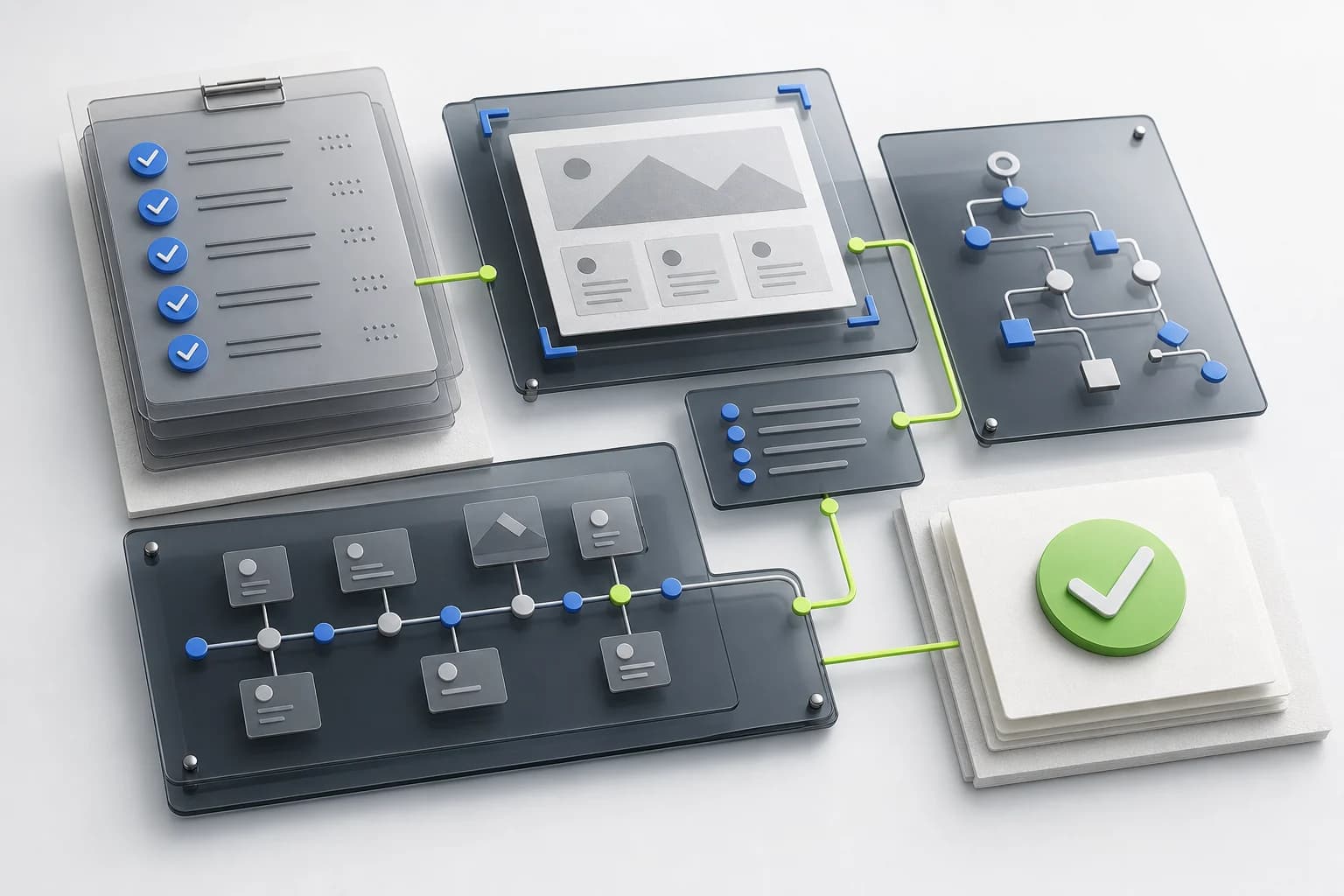
Practical audit checklist
Audit the task, not the technology list.
Use this checklist to turn a broad agent-readiness review into repeatable scenarios, observable evidence and fixes your team can verify.
Read the guideReviewed Aug 25, 2026
Aiscovery resources
Clear guidance for teams adapting websites to AI discovery, browser agents and emerging structured interfaces.
Start with the task-based readiness model, then inspect accessibility, session evidence, structured browser tools and text-first content maps.
Practical audit checklist
Use this checklist to turn a broad agent-readiness review into repeatable scenarios, observable evidence and fixes your team can verify.
Readiness model
A ready website helps an agent find the right facts, understand the available actions and reach a verified result within declared safety boundaries.
Layout stability
A stable page keeps the control an agent understood in the same place long enough to complete the intended action and verify the result.
Accessibility and agents
Browser agents often use the accessibility tree to identify controls. Strong semantics improve human access first and create a clearer machine-action surface.
Evidence and performance
A useful replay connects observable agent actions to timing, browser state and an independent final assertion without exposing sensitive data or hidden reasoning.
Emerging agent interfaces
The proposed browser standard can expose structured tools in visible page context. Treat it as progressive enhancement, with the same product and security discipline as any write-capable interface.
Machine-readable content
A concise Markdown guide can help agents reach authoritative content. Its value depends on accuracy, useful links and consistency with canonical HTML.
E-commerce testing
Turn product discovery, variant selection and cart review into a repeatable agent test with controlled fixtures and a safe production boundary.
Booking and travel testing
Turn search, inventory, price and policy into a repeatable agent scenario that preserves one valid choice through review without making a production booking.
SaaS journey testing
Connect marketing, docs and product state in one repeatable agent scenario without creating an unintended production account or subscription change.
Marketplace journey testing
Keep the listing, seller, condition, total and trust evidence attached to one offer from discovery through a controlled transaction boundary.
Agency audit delivery
Turn one client journey into a versioned baseline, reviewable evidence, an owner-ready backlog and a comparable retest.
A launch-partner audit connects these technical signals to one real workflow, recorded evidence and prioritized remediation.